



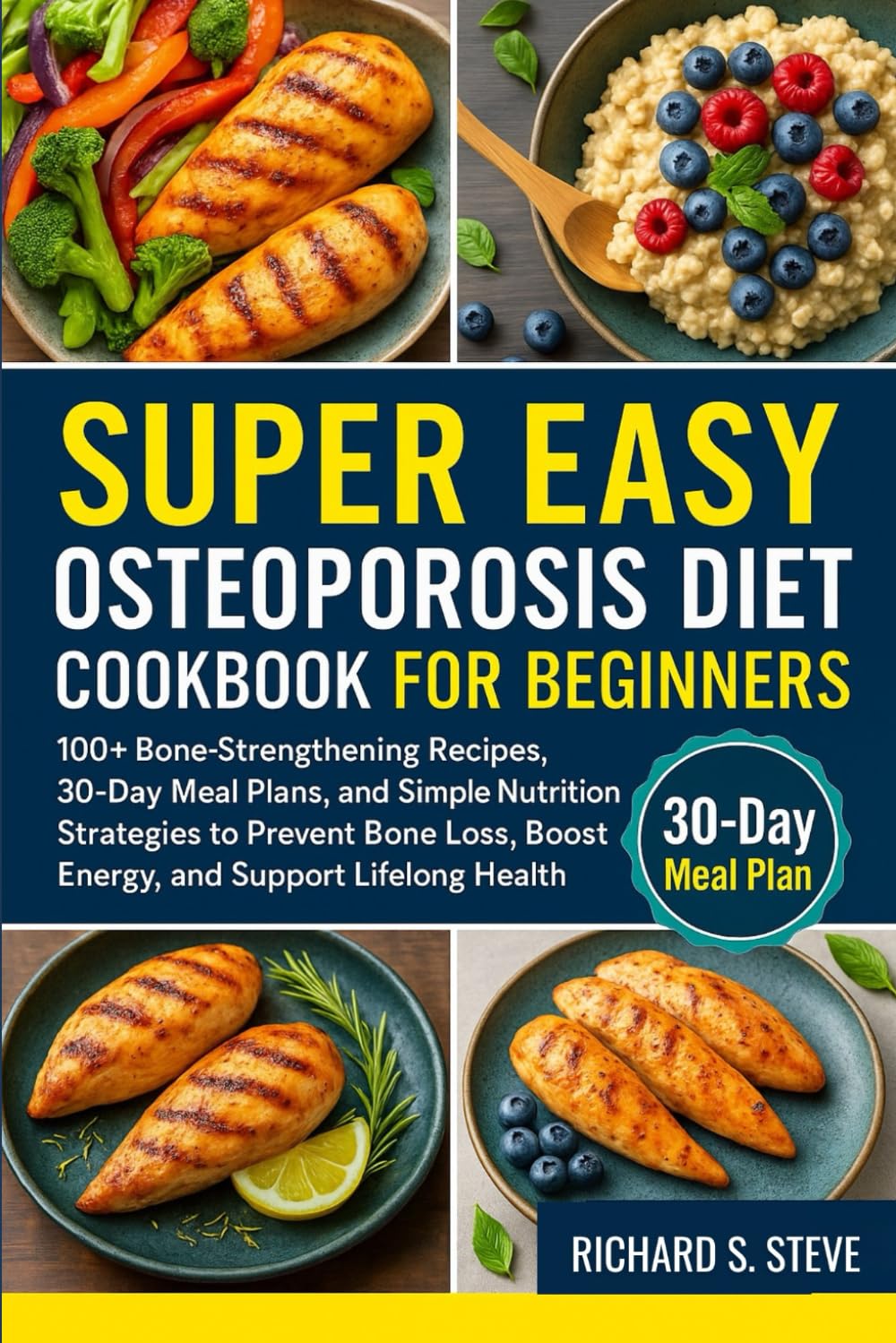
SUPER EASY OSTEOPOROSIS DIET COOKBOOK FOR BEGINNERS: 100+ Bone-Strengthening Recipes, 30-Day Meal Plans, and Simple Nutrition Strategies to Prevent Bone Loss, Boost Energy, and Support Lifelong Health

 4.6 (65 items)
 Limited Time Sale
US$12.03 cheaper than the new price!!
Free cash-on-delivery fees for purchases over $99
Product details
| Management number | 233462218 | Release Date | 2026/06/27 | List Price | US$8.02 | Model Number | 233462218 | ||
|---|---|---|---|---|---|---|---|---|---|
| Category | |||||||||
Understanding OsteoporosisOsteoporosis is often described as the “silent bone thief,” and for good reason. It progresses quietly over the years, gradually weakening the structure of the bones until even the smallest slip, bump, or fall can result in a fracture. For many beginners, the word itself sounds intimidating, almost as if it’s something only older adults should worry about. But the truth is, osteoporosis is not simply a disease of aging. It is the cumulative effect of years of bone development, lifestyle choices, and nutrition habits. Understanding it is the very first step to prevention, management, and building a healthier, stronger future.What Osteoporosis IsOsteoporosis is a condition in which bones lose density, becoming porous, fragile, and more susceptible to fractures. Imagine your bones as a honeycomb. In healthy bones, this honeycomb is dense and strong. In osteoporotic bones, the spaces inside the honeycomb grow larger, the walls thin out, and the structure weakens. This means the bones no longer provide the same level of support and protection they once did.It is not something that develops overnight. Bone tissue is constantly being broken down and rebuilt, a process called bone remodeling. Osteoporosis occurs when bone breakdown happens faster than bone rebuilding, leaving the skeletal framework compromised.Why It HappensThere are many reasons why osteoporosis develops, and they are often a combination of biological, lifestyle, and environmental factors. Some of the most important include:Aging: Bone density naturally decreases with age. After the age of 30, bone mass gradually begins to decline.Hormonal Changes: Women are at higher risk after menopause because estrogen, a hormone that protects bone mass, drops sharply. Men can also experience bone loss due to lower testosterone levels over time.Genetics: A family history of osteoporosis or fractures increases the risk.Lifestyle Habits: Sedentary living, poor diet, smoking, and excessive alcohol intake all contribute to weakened bones.Medical Conditions and Medications: Certain conditions like thyroid disorders, celiac disease, and long-term use of corticosteroids can accelerate bone loss.These factors work together, making some people more vulnerable than others. But the good news is that even though we cannot control aging or genetics, we can take charge of lifestyle habits and nutrition.How Bones Weaken Over TimeBones may look solid, but they are living, dynamic tissues. They are constantly undergoing changes in a cycle of breakdown (resorption) and rebuilding (formation). When you are young, bone formation happens faster than breakdown, allowing your skeleton to grow stronger and denser. By your late twenties, you reach what is called peak bone mass, the strongest your bones will ever be.After that, the balance shifts. Bone breakdown begins to outpace rebuilding, particularly in the absence of key nutrients or protective hormones. Over time, the skeleton loses its density, and bones become fragile. This process is slow and often goes unnoticed until the first fracture occurs—often in the wrist, spine, or hip.The weakening is invisible; there are usually no symptoms until a break happens. This is why osteoporosis is often referred to as a “silent disease.”The Role of Food in Prevention and ManagementWhile osteoporosis cannot always be prevented entirely, nutrition is one of the most powerful tools we have to slow its progression and reduce the risk of fractures. Food directly influences the supply of raw materials your body needs to build and maintain bone tissue.Key Nutrients for Bone HealthCalcium: The main building block of bones. Without enough calcium, the body will pull calcium from bones to keep blood levels steady, weakening the skeleton.Vitamin D: Essential for absorbing calcium from food. Without vitamin D, even a calcium-rich diet may not protect bone health. Read more
| ASIN | B0FXY45RS7 |
|---|---|
| ISBN13 | 979-8271509216 |
| Language | English |
| Publisher | Independently published |
| Dimensions | 6 x 0.39 x 9 inches |
| Item Weight | 11.2 ounces |
| Print length | 171 pages |
| Publication date | October 25, 2025 |
Bestseller ranking
Osteopathy



Customers who viewed this product also viewed
General

Correction of product information
If you notice any omissions or errors in the product information on this page, please use the correction request form below.
Correction Request Form